 Reviews



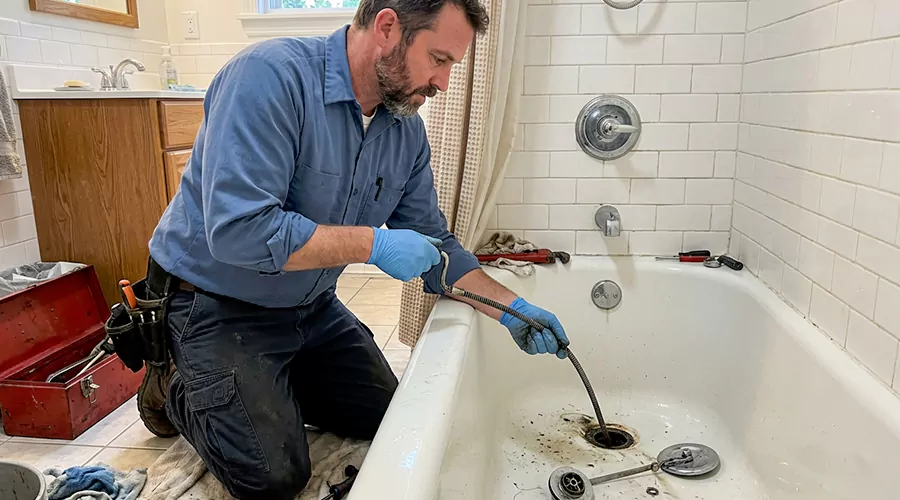
A clogged bathtub drain should be fixed by locating the blockage before choosing the tool. Hair near the stopper often needs manual removal while deeper clogs need plunging or a hand auger. Professional unclogging usually costs $150 to $350 in 2026. A temporary improvement is not the same as a complete repair. If the tub becomes slow again after the next few uses, part of the obstruction probably remains.
What Is Causing the Clogged Bathtub Drain?
Hair mixed with soap residue is the most common bathtub clog. The stopper mechanism can collect strands before they reach the pipe. A trip-lever assembly can also trap material behind the overflow plate.
- Body oils can contribute to sticky buildup.
- Mineral deposits can narrow older drainage surfaces.
- A small object can create another catch point.
The keyword clogged bathtub drain describes the symptom but not the depth of the obstruction. Depth determines the repair. A surface clog needs extraction. A deeper restriction needs mechanical access farther into the waste line.
How Can You Tell How Bad the Clog Is?
A partial clog still lets the tub empty after use. A severe clog leaves standing water for a long period. A deeper branch-drain problem can affect nearby fixtures at the same time.
| Drain Condition | Typical Symptom | Likely Repair | 2026 Cost |
|---|---|---|---|
| Surface buildup | Slow water | Remove hair | Often DIY |
| Partial clog | Pooling water | Plunger | $25 to $50 DIY |
| Deep clog | Water barely moves | Hand auger | $150 to $350 professional |
| Drain failure | Leak or damaged pipe | Drain repair | $500 to $1,020 replacement |
Professional tub clearing commonly costs $150 to $350. Drain replacement is a much larger project and averages about $700 in 2026. The goal is to solve the obstruction before pipe replacement ever becomes relevant.
What Warning Signs Point to a Deeper Drain Problem?
A persistent bathtub clog produces more clues than standing water alone. Pay attention to what happens elsewhere while the tub drains.
- Visible hair removal does not improve flow.
- The tub becomes slow again the same day.
- A plunger changes nothing.
- The drain gurgles repeatedly.
- Another bathroom fixture drains slowly.
- The toilet reacts when the tub empties.
- Dirty water backs into the bathtub.
- A hand auger reaches strong resistance repeatedly.
- The tub remains full long after use.
- Water leaks below the drain connection.
Multiple backed-up fixtures can indicate a larger line blockage rather than a problem directly beneath the stopper. That is the point where repeated surface cleaning stops being useful.
How Do You Check the Stopper First?
The stopper is the first place to inspect because hair commonly wraps around its shaft or linkage. The removal method depends on the stopper design.
- A lift-and-turn stopper usually releases differently from a toe-touch model.
- A trip-lever design uses linkage behind the overflow plate.
- A pop-up drain can have another connection.
- Identify the design before forcing anything.
- Remove the stopper carefully.
- Clean the shaft.
- Pull hair from the drain crossbars.
- Wash residue from the stopper.
Current tub-drain guidance recommends identifying the stopper style before repair. Reinstalling a dirty stopper can immediately start collecting new hair.
How Do You Fix a Hair Clog?
Hair close to the opening should be pulled upward with a flexible drain tool or narrow pliers. This approach removes the actual obstruction rather than pushing it deeper.
- Wear gloves.
- Use a flashlight.
- Insert the tool around the drain crossbars.
- Rotate slightly.
- Pull upward slowly.
- Remove captured material.
- Repeat from another angle.
- Test with water.
The supplied keyword bathtub clogged relates to this common symptom. Hair removal is often enough when the clog has not moved past the upper drain assembly.
How Do You Fix a Clog With a Plunger?
Plunging works better after reachable hair has already been removed. The bathtub overflow must be sealed because it is part of the same drainage pathway.
- Place a wet cloth over the overflow.
- Add enough water to cover the plunger rim.
- Center a flat cup plunger.
- Push down firmly.
- Pull upward.
- Repeat 15 to 30 times.
- Remove the plunger.
- Check the water speed.
Current 2026 repair guidance recommends sealing the overflow before plunging a clogged tub. A poor seal allows pressure to escape.
How Do You Fix a Deeper Bathtub Clog?
A manual drain auger is the next step when plunging fails. The overflow opening is often the better access point because it leads toward the trap without the sharp turns near the tub drain.
- Remove the overflow plate.
- Pull out the stopper linkage if present.
- Insert the auger cable.
- Advance it in short sections.
- Rotate when resistance appears.
- Pull the cable back.
- Remove captured debris.
- Flush with water.
Manual snakes are commonly available for under $25. Motorized versions can create greater damage risk when used without experience. A slow controlled cable is enough for many household hair clogs.
Could the Stopper Be Causing the Slow Drain?
Yes. Some trip-lever tubs use a plunger-style stopper inside the overflow assembly. If the linkage sits too low the stopper can partly block the waste opening even when the lever appears open.
- Remove the overflow plate.
- Inspect the linkage.
- Look for wrapped hair.
- Check the stopper position.
- Clean the components.
- Adjust only according to the mechanism design.
Current 2026 tub guidance identifies a misadjusted trip-lever stopper as a condition that can mimic a pipe clog. This is an important diagnostic because more snaking will not correct a stopper that remains partly closed.
How Do You Know the Repair Worked?
A repaired tub should accept sustained water flow without pooling. Testing for several minutes is better than pouring one small cup into the drain.
- Run water slowly first.
- Observe the drain.
- Increase the faucet flow.
- Continue for several minutes.
- Turn the water off.
- Watch the remaining water clear.
- Check the stopper operation.
A proper repair restores both drainage and normal stopper function. If the tub drains only with the stopper removed, inspect the stopper adjustment again.
When Should You Call a Professional?
Professional help becomes appropriate when mechanical DIY methods fail or the tub repeatedly clogs. A shared drainage problem becomes more likely when nearby fixtures also slow down.
Professional unclogging typically costs about $150 to $350 in 2026. Drain replacement costs $500 to $1,020 when damaged drainage components require replacement.
Professional diagnosis is reasonable when:
- Multiple drains are affected.
- Sewage backs into the bathtub.
- The auger cannot restore flow.
- Water leaks below the tub.
- The clog repeatedly returns.
- The drain assembly itself is damaged.
A damaged bathtub drain replacement problem should not be treated as another ordinary hair clog.
How Can You Keep the Repair From Failing Again?
The best prevention is keeping hair from reaching the stopper assembly. A drain screen collects hair where it can be removed easily.
- Empty the screen frequently.
- Clean the stopper shaft.
- Check slow drainage early.
- Avoid washing debris into the tub.
- Remove hair before it enters the pipe.
- Inspect trip-lever movement if drainage changes.
A preventive screen costs far less than the typical professional clearing range. Regular surface cleaning also makes each later inspection easier.
Conclusion
Knowing how to fix a clogged bathtub drain means determining where the obstruction sits before selecting a tool. Clean the stopper first. Pull reachable hair next. Plunge with the overflow sealed and use a hand auger when the clog is deeper. If the tub remains slow after those steps or other fixtures become affected, professional diagnosis may be appropriate. This week, check beneath the stopper for trapped hair.
Frequently Asked Questions
Why does my bathtub drain clog again after cleaning?
Some hair may remain farther into the trap. A deeper blockage can collect new material quickly.
Can the bathtub stopper cause slow drainage?
Yes. A dirty or misadjusted stopper can restrict the drain even when the pipe itself is relatively clear.
Is a drain snake better than a plunger?
They solve different problems. A plunger moves a nearby obstruction while a snake reaches material farther into the line.
Why is my tub slow after I removed all visible hair?
The remaining blockage may sit deeper in the trap or drain pipe.
Does drain replacement fix recurring clogs?
Replacement is normally for damaged drain components. An ordinary clog should be diagnosed and cleared before replacement is considered.